Why is my garage door making a grinding noise
A grinding garage door in Midland, IN almost always means worn rollers, dry tracks, or a failing opener gear. Here's how to pinpoint the cause and stop the noise.
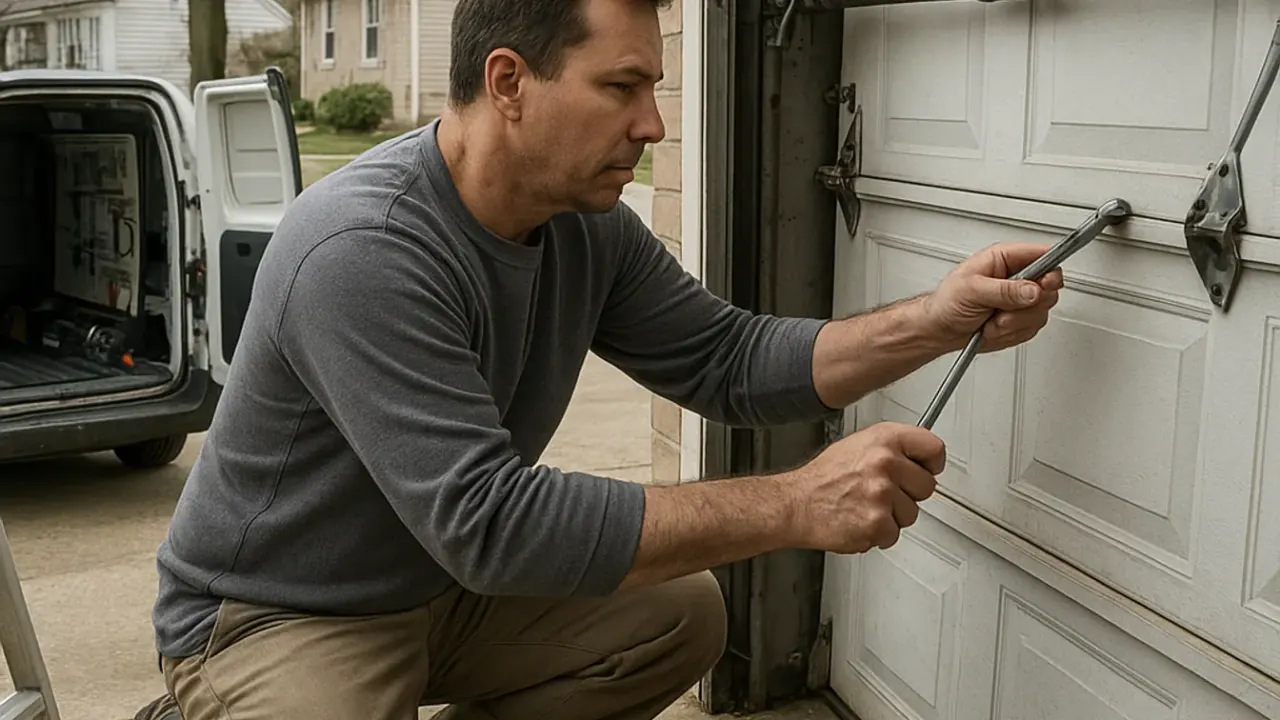
A grinding noise from your garage door is almost always metal-on-metal contact - worn rollers scraping the track, a dry torsion tube, or stripped gears inside the opener. In Midland, IN, the three most common culprits we see are nylon rollers that have flat-spotted, tracks packed with grit from our gravel driveways, and opener drive gears that have chewed themselves smooth. The good news: none of those require a new door. The rest of this post walks through each cause, what it sounds like, what it costs to fix in 2026, and when the noise is a warning you should not ignore.
We are Midland Garage Door Pros, and we have been inside hundreds of garages across this town - from the older doors near Downtown Midland to the newer builds out toward Grassland. If you want a team that already knows the difference between a roller squeal and a gear grind, we offer garage door repair midland IN with same-day appointments on most calls.
What a grinding noise actually means
Garage door grinding noise midland IN is the sound of two hard surfaces rubbing that should never touch - usually a metal roller against a steel track, or a stripped gear inside the opener housing. It is different from a squeak (dry hinge), a rattle (loose bolt), or a pop (spring under tension).
If you can hear the grind while the door is moving, the friction is happening somewhere in the travel path: the track, the rollers, the hinges, or the torsion tube. If you hear it only when the motor kicks on and the door does not move, the problem is inside the opener.
That distinction saves you money. A track-and-roller issue is a $150-$350 repair. A dead opener gear can run $250-$500 depending on the unit. Knowing which one you have before you call keeps everyone honest.
The six most common causes of garage door grinding noise in Midland, IN
Here is what we actually find when we pull up to a Midland home with a grinding door, ranked by how often we see it.
1. Worn nylon or steel rollers
Rollers are the wheels that ride inside the track. Nylon rollers last about 7-10 years in our climate; steel rollers can go 12-15 but get loud once the bearings dry out. When a roller flat-spots, it stops rolling and starts dragging - that is the grind.
Replacing all rollers on a standard two-car door runs $150-$250 in 2026, parts and labor. It is one of the cheapest fixes on this list and the one most likely to solve your problem.
2. Dirty or misaligned tracks
Midland sits on a lot of gravel and unpaved driveways. That grit gets kicked up into the track and acts like sandpaper against the roller edges. A track that has been bumped - by a trash can, a bike, a teenager backing out too fast - pinches the roller and produces a hard grind at one specific spot in the door's travel.
We clean and re-align tracks on most service calls. If the track is bent beyond saving, replacement is $200-$400 per side.
3. Dry torsion tube or bearings
The torsion tube is the horizontal steel bar above the door that holds the springs. It spins inside two end bearings every time the door moves. When those bearings dry out, you get a low, continuous grind that follows the door the whole way up and down.
This is the one most homeowners misdiagnose as "the opener is going bad." It is not. A few drops of white lithium grease on the bearings and tube usually quiets it - but if the bearings are pitted, they need to be replaced.
4. Stripped opener drive gear
Chain-drive and screw-drive openers have a plastic or nylon drive gear inside the motor housing. After 8-12 years, the teeth wear down and the gear starts slipping against the sprocket. The sound is a rapid, mechanical grind that happens the moment the motor engages - and the door often does not move at all.
This is a garage door opener repair midland IN job, not a door job. We replace the gear and re-lubricate the rail; on most units that is $180-$320. If the opener is over 15 years old, replacement is often the smarter spend.
5. Loose or worn hinges
Sectional doors have hinges at every panel joint. When the hinge pin wears, the metal plates grind against each other as the door articulates around the curve. You will hear it most in the first two feet of travel, right as the door starts to bend.
Tightening and lubricating hinges is part of any tune-up. Replacing a full set of hinges is $80-$180.
6. Failing springs dragging on the tube
When a torsion spring starts to fail, it can unwind slightly and rub against the torsion tube or the center bearing plate. That produces a grinding sound paired with a door that feels heavier than usual or stops halfway up.
Do not ignore this one. A spring under tension that is already compromised is the most dangerous part of the whole system. We handle garage door spring replacement midland IN with the door braced and the tension released before we touch anything.
Why is my garage door making a grinding noise in Midland, IN?
In Midland specifically, the answer usually comes down to grit and age. Our unpaved driveways and the freeze-thaw cycle from November through March push fine abrasive dust into every track and bearing, and that dust accelerates wear on rollers and torsion bearings faster than you would see in a city with all-paved streets.
We also have a lot of homes built between 1975 and 1995 with original steel rollers and chain-drive openers still in service. Those components are at or past their design life. If your door is original to a house from that era and it just started grinding, the cause is almost certainly one of the six above - not something exotic.
One more local factor: humidity swings. Midland summers push relative humidity into the 70s and 80s, then winter drops it into the 30s. That cycle pulls lubricant out of bearings and leaves them dry. If your door grinds in July but was quiet in April, dry bearings are the first thing we check.
Is a grinding garage door dangerous in Midland, Indiana?
Sometimes. A grinding noise from a worn roller or a dirty track is annoying but not dangerous - you can safely keep using the door for a few days while you schedule the repair. A grinding noise from a failing torsion spring or a door that is coming off its tracks is a different situation entirely.
Stop using the door and call us if you see any of these alongside the grind:
- The door looks crooked or one side is higher than the other
- You hear a loud bang followed by grinding
- The door stops halfway and will not close
- You can see a gap between a roller and the track
- The spring above the door looks stretched, separated, or has a visible gap in the coil
A torsion spring holds 150-250 pounds of tension. If it lets go while someone is standing under the door, that is a serious injury. We have seen it happen. Do not test it yourself.
How do I stop my garage door from grinding in Midland, IN?
Start with the cheapest fix and work up. Here is the order we recommend to homeowners who call us before booking a service visit.
- Disconnect the opener using the red emergency release cord so the door is on manual.
- Inspect the tracks with a flashlight. Look for grit, bends, or a roller sitting outside the track channel.
- Wipe the tracks clean with a dry rag. Do not use WD-40 on the tracks - it attracts dust and makes the problem worse.
- Lubricate the rollers, hinges, and torsion bearings with white lithium grease or a silicone-based garage door lubricant. Never use motor oil.
- Run the door manually a few times and listen. If the grind is gone, reconnect the opener and test again.
- If the grind persists or the door feels heavy, stop and call us. That points to springs or the opener gear.
If you already tried lubricating and the grind came back within a week, the lubricant is not the problem - the component underneath it is. That is when a garage door roller replacement midland IN or a bearing swap is the real fix.
Common mistakes we see on Midland garage doors
We get called to fix a lot of damage that started as a small DIY attempt. Here are the ones that cost homeowners the most.
- Spraying WD-40 on the tracks. WD-40 is a solvent, not a lubricant. It strips the factory grease and leaves a sticky film that collects grit. Use white lithium grease on the moving parts and leave the tracks dry.
- Greasing the tracks themselves. The rollers should roll, not slide. Greasing the track makes them slide and flat-spot faster.
- Adjusting the springs. Torsion springs are under lethal tension. There is no safe DIY adjustment. This is the single most common cause of garage door injuries in the U.S.
- Ignoring a bent track. A bent track will chew through a new set of rollers in a few months. Fix the track first.
- Replacing the opener when the door is the problem. If the door is heavy because a spring is failing, a new opener will burn out within a year. Diagnose the door before you spend $400 on a motor.
When to call a professional
Call a professional the moment the grinding noise is paired with a door that feels heavy, moves unevenly, or stops partway. Those are spring and cable symptoms, and they are not safe to diagnose from the ground with a flashlight.
You should also call us if you have already lubricated everything and the grind is still there after two cycles. That tells us the wear is mechanical, not lubrication-related, and it will only get worse. We see this a lot in the older housing stock around Old Midland garage door repair, where original 1980s hardware is finally giving out.
Our technicians carry rollers, hinges, bearings, and opener gears on the truck, so most grinding-noise calls are a single visit. We diagnose in front of you, quote a flat price before we start, and do not leave until the door runs quiet.
Frequently Asked Questions
Why is my garage door making a grinding noise in Midland, IN?
Nine times out of ten it is a worn roller dragging on the track or a dry torsion bearing. In Midland, grit from unpaved driveways accelerates roller wear, so we see this on doors that are only 6-8 years old. A stripped opener gear is the next most common cause.
Is a grinding garage door dangerous in Midland, Indiana?
It is dangerous if the grind comes with a crooked door, a loud bang, or a door that stops halfway - those point to a failing spring or a cable off its drum. A grind from a worn roller is not immediately dangerous, but it will damage the track if you leave it more than a few weeks.
How do I stop my garage door from grinding in Midland, IN?
Clean the tracks with a dry rag, then lubricate the rollers, hinges, and torsion bearings with white lithium grease. Do not grease the tracks themselves. If the grind is still there after two full cycles, the worn part needs to be replaced - usually rollers, at $150-$250.
Should I call a pro for garage door grinding noise in Midland?
Yes, if the door feels heavy, moves unevenly, or the grind started suddenly after a bang. Those are spring and cable symptoms, and adjusting them without the right tools is how people get hurt. For a simple roller grind, a pro visit is still usually under $250 and includes a full safety check.
Can I just replace the rollers myself?
You can, on a door that is already on manual and fully down. But if the track is bent or the hinges are worn, new rollers will not fix the noise. We replace rollers and re-align the track in one visit for $150-$250, which is close to what the parts cost retail.
Get help with garage door repair in Midland
A grinding garage door is a wear signal, not a death sentence. Catch it early and you are looking at a $150-$350 repair. Ignore it for a season and you are looking at tracks, rollers, and possibly an opener.
Call Midland Garage Door Pros at 4323210066 and we will diagnose the noise on the spot, quote a flat price, and have your door running quiet the same day. We serve every neighborhood in Midland, from garage door repair in Downtown Midland out to the newer builds near Grassland.